
List The Three Activities Alcinous Uses To Entertain Odysseus: The Complete Guide To Homer’s Memorable Feast
Few moments in The Odyssey are as revealing as the grand welcome Odysseus receives in the land of the Phaeacians. After years of hardship, shipwrecks, battles, and loss, the exhausted hero finally encounters a king who treats him not as a stranger to be feared but as an honored guest. That king is Alcinous, ruler of the Phaeacians, and his methods of entertaining Odysseus reveal some of the most important values in ancient Greek culture.
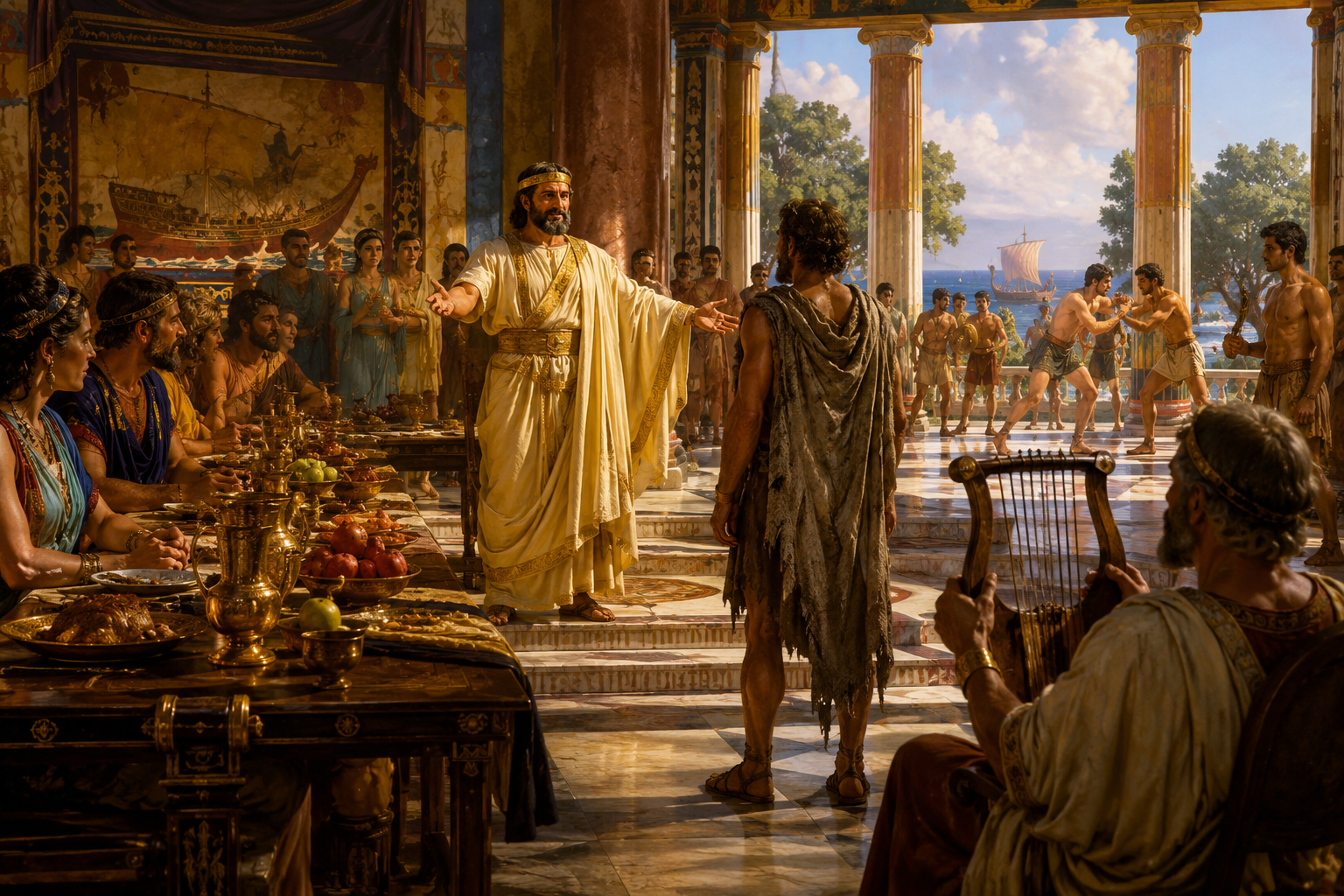
If you have ever been asked to list the three activities Alcinous uses to entertain Odysseus, the short answer is simple: he provides a lavish feast, organizes athletic games, and presents music and storytelling through the bard Demodocus. Yet the significance of these activities goes far beyond a simple list. Each one serves a specific purpose in the narrative and helps readers understand hospitality, honor, and heroism in Homer’s epic.
By the end of this guide, you will understand not only what the three activities are but also why Homer devoted so much attention to them and how they shape Odysseus’ journey home.
- Alcinous entertains Odysseus with a feast, athletic competitions, and musical performances.
- These activities reflect the Greek concept of hospitality known as xenia.
- The bard Demodocus plays a key role by singing stories connected to the Trojan War.
- The events help reveal Odysseus’ identity and reputation.
- They demonstrate the cultural values of honor, generosity, and community.
Who Is Alcinous in The Odyssey?
Before examining the three activities, it helps to understand who Alcinous is and why his actions matter.
Alcinous is the king of the Phaeacians, a prosperous seafaring people who live on the island of Scheria. When Odysseus arrives after surviving a devastating shipwreck, he is physically exhausted and emotionally drained. Most rulers in ancient epics would first question an unknown traveler. Alcinous does something different.
He welcomes the stranger before even learning his identity. This reflects the Greek ideal of xenia, the sacred duty of hospitality toward guests.
Why does Alcinous treat Odysseus so generously?
The key thing most people miss is that Alcinous does not know he is entertaining the famous Odysseus at first. His kindness is based on principle rather than personal gain. In Greek culture, mistreating a guest could offend the gods, especially Zeus, who was considered the protector of travelers and strangers.
Why is this scene important?
The Phaeacian episode serves as a bridge between Odysseus’ adventures and his eventual return to Ithaca. Without Alcinous’ assistance, Odysseus might never make it home.
What Are the Three Activities Alcinous Uses to Entertain Odysseus?
The direct answer consists of three major forms of entertainment: feasting, athletic contests, and music performed by the bard Demodocus.
| Activity | Purpose | Impact on Odysseus |
|---|---|---|
| Feasting | Shows hospitality and generosity | Provides comfort and dignity |
| Athletic Games | Displays skill and honor | Allows him to prove his strength |
| Music and Storytelling | Preserves heroic history | Triggers emotional memories |
Let’s examine each activity in greater detail.
Activity #1: The Lavish Feast
Why does the feast come first?
One of the most interesting details is that Alcinous prioritizes food before questions. Modern readers often overlook this point. In ancient Greece, caring for a guest’s immediate needs was considered a moral responsibility.
Odysseus arrives hungry, exhausted, and vulnerable. The feast restores his physical strength and signals that he is safe among friends.
What happens during the feast?
Servants prepare food and wine while nobles gather to celebrate. The event is more than a meal. It is a public display of generosity and respect.
In practice, feasts in Greek society served social, political, and religious purposes. They reinforced alliances, demonstrated wealth, and honored guests.
What does the feast symbolize?
The feast symbolizes civilization itself. Throughout The Odyssey, Odysseus encounters monsters, cannibals, and hostile peoples. The orderly banquet of the Phaeacians stands in sharp contrast to those dangerous experiences.
Activity #2: Athletic Games and Competitions
What athletic events are held?
After the feast, Alcinous organizes athletic contests featuring running, wrestling, jumping, boxing, and discus throwing. These competitions showcase the talents of the Phaeacian youth.
At first, Odysseus watches from the sidelines. He is a guest, not a participant.
Why does Odysseus join the games?
One young Phaeacian, Euryalus, insults Odysseus and suggests he lacks athletic ability. This challenges the hero’s honor.
Most people do not realize that reputation was one of the most valuable possessions in ancient Greek culture. An insult to a warrior’s abilities demanded a response.
Odysseus accepts the challenge and throws a discus farther than anyone else. The feat immediately earns respect from the crowd.
Why are the games important?
The athletic contests remind readers that Odysseus is more than a clever strategist. He is also physically capable and worthy of heroic status.
Homer uses the games to reveal character through action rather than description. Instead of telling readers that Odysseus is strong, he shows it.
Activity #3: Music and Storytelling by Demodocus
Who is Demodocus?
Demodocus is a blind bard highly respected by the Phaeacians. His role may seem simple at first glance, but he becomes one of the most significant figures in this section of the epic.
In ancient Greek society, bards preserved history through song. They were entertainers, historians, and cultural educators all at once.
What songs does Demodocus perform?
Demodocus sings about events connected to the Trojan War, including stories involving Odysseus himself. Hearing these songs causes Odysseus to become emotional.
He quietly weeps as memories of war, sacrifice, and lost companions return.
Why is this storytelling so powerful?
Here’s a counter-intuitive insight: the songs entertain everyone except the person most closely connected to them. While the audience enjoys the performance, Odysseus relives painful experiences.
This emotional reaction eventually attracts Alcinous’ attention and helps lead to the revelation of Odysseus’ true identity.
What does Homer achieve through these scenes?
Homer demonstrates the power of stories to preserve memory. Long before books, movies, or digital media existed, oral storytelling carried cultural knowledge across generations.
What Do These Three Activities Reveal About Ancient Greek Culture?
The value of hospitality
Each activity reinforces the importance of treating guests with generosity. Hospitality was not optional; it was a moral obligation.
The importance of honor
The athletic contests highlight the Greek admiration for excellence, achievement, and personal reputation.
The power of storytelling
Demodocus’ songs show how cultures preserve their history and values through narrative traditions.
- Hospitality
- Respect for guests
- Heroic excellence
- Cultural memory
- Community celebration
- Isolation
- Hostility toward strangers
- Dishonor
- Forgetfulness
- Chaos and disorder
Why Students Are Often Asked About These Activities
Teachers frequently focus on Alcinous’ entertainment because it condenses many of the epic’s major themes into a single sequence. Students can analyze hospitality, heroism, identity, memory, and social values through these scenes alone.
Another reason is that the sequence demonstrates Homer’s skill as a storyteller. Each activity accomplishes multiple goals simultaneously: entertaining the audience, developing character, and moving the plot forward.
Most people remember the events individually but miss how carefully they are arranged. The feast restores Odysseus physically. The games restore his reputation. The songs reconnect him with his past. Together, they rebuild the hero before his return home.
Conclusion
If you need to list the three activities Alcinous uses to entertain Odysseus, the answer is straightforward: a feast, athletic games, and music performed by the bard Demodocus. However, understanding why these activities matter reveals much more about The Odyssey.
Through food, competition, and storytelling, Alcinous demonstrates ideal hospitality while helping Odysseus regain strength, honor, and identity. These scenes showcase the values that defined ancient Greek society and explain why the Phaeacian episode remains one of the most memorable parts of Homer’s epic.
The next time you encounter this question in class or on an exam, remember that the real significance lies not just in naming the three activities but in understanding how they transform Odysseus and prepare him for the final stage of his journey home.
Frequently Asked Questions
What are the three activities Alcinous uses to entertain Odysseus?
Alcinous entertains Odysseus with a lavish feast, athletic competitions, and musical storytelling performed by the bard Demodocus.
Why does Alcinous hold athletic games?
The games celebrate Phaeacian excellence and give Odysseus an opportunity to demonstrate his own heroic abilities.
Who is Demodocus in The Odyssey?
Demodocus is a blind bard whose songs preserve history and culture while revealing important truths about Odysseus.
Why does Odysseus cry during Demodocus’ songs?
The songs remind him of the Trojan War and the hardships he endured, causing a deeply emotional response.
What theme is highlighted by Alcinous’ treatment of Odysseus?
The primary theme is hospitality, or xenia, which was considered a sacred duty in ancient Greek culture.