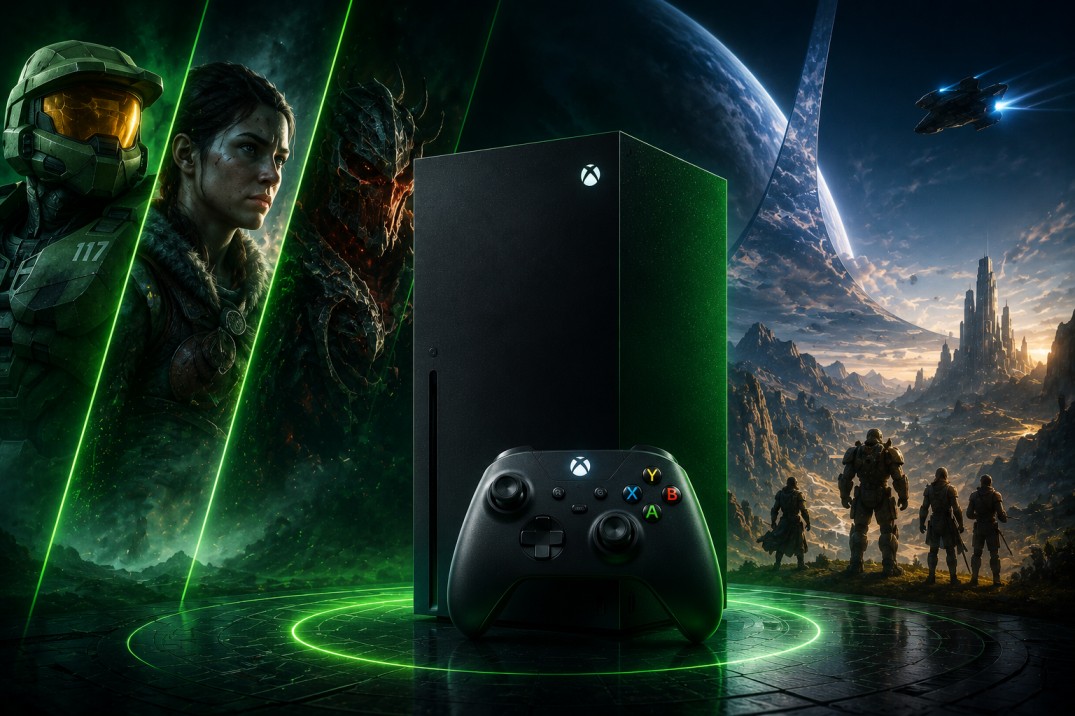
Xbox’s strategy has taken another major turn in 2026, and this time it has nothing to do with hardware or chip shortages. Under new CEO Asha Sharma, Microsoft is reversing course on one of the defining policies of the Phil Spencer era: the idea that Xbox games should go everywhere. After years of breaking down platform walls and bringing first-party titles to PlayStation and Nintendo Switch, Xbox is now actively bringing exclusivity back into the conversation.
If you have been following the back-and-forth headlines about Xbox exclusives this year and want the full picture, here is exactly what has changed and why.
A New CEO, A Different Philosophy
Asha Sharma stepped into the role of Xbox CEO on February 20, 2026, succeeding Phil Spencer, who had overseen years of Microsoft’s multiplatform push. Since taking over, Sharma has driven a visible strategic reset across the brand, including retiring the long-running This is an Xbox marketing campaign, cutting Game Pass prices, and even rebranding the platform’s stylization from Xbox to XBOX as part of a broader identity refresh.
Sharma has also brought in respected gaming analyst Matthew Ball as Xbox’s Chief Strategy Officer, signaling that this transition involves serious strategic rethinking rather than cosmetic changes alone. Together, they have been steering the brand toward what Sharma describes as restoring our core, a phrase that has become something of a guiding principle for the division’s direction in 2026.
The Exclusivity Reversal: Gears of War and Clockwork Revolution
The clearest signal of this shift came when Xbox announced that upcoming titles Gears of War: E-Day and Clockwork Revolution would be exclusive to Xbox consoles and PC, breaking from the multiplatform approach that had defined recent years. Xbox Chief Content Officer Matt Booty explained the reasoning directly to Variety, stating that the goal is to give Xbox players a reason to believe in Xbox, a reason to buy an Xbox, and to reward the people who have remained loyal to the platform.
This represents a genuinely significant philosophical reversal. Titles like Sea of Thieves, Hi-Fi Rush, and Grounded had already made their way to rival platforms in recent years under the previous multiplatform strategy, and reports suggest 2026 could mark the point where this shift toward selective exclusivity becomes effectively irreversible for certain franchises.
Not a Blanket Policy, At Least Not Yet
Despite the headline-grabbing exclusivity announcements, Sharma has been careful to avoid committing to a rigid, one-size-fits-all policy. In a June 2026 statement, she described exclusivity as a tough topic and confirmed that Microsoft’s gaming division is evaluating the question on a title-by-title basis rather than adopting a single rule across the board.
This nuanced approach appears intentional. Reports suggest Microsoft is more likely to keep first-party single-player narrative titles exclusive while still allowing multiplayer-driven, broadly appealing games like Forza Horizon 6 to eventually reach other platforms including PlayStation 5 and Nintendo Switch 2. The logic here is straightforward: multiplayer titles benefit from larger player pools across platforms, while single-player exclusives give people an actual reason to choose Xbox hardware or commit to a Game Pass subscription.
Why Some Major Games Skipped the Showcase
Notably, both Blade and The Elder Scrolls VI were absent from Xbox’s most recent showcase, and Matt Booty addressed the omission directly, explaining the thinking behind the platform’s shifting exclusivity approach. This suggests Microsoft is being deliberate about which games it positions as platform-defining exclusives versus which ones continue under the older multiplatform model, rather than making blanket announcements before internal decisions are finalized.
Restoring the Fundamentals Through Frequent Updates
Beyond the exclusivity debate, Sharma has emphasized a renewed focus on fixing what she calls the fundamentals of the Xbox experience on both console and PC. She has reportedly committed to delivering Xbox updates roughly every two weeks, a notably aggressive cadence aimed at addressing long-standing user experience complaints rather than only chasing splashy feature announcements.
This has already translated into concrete changes, including significant improvements to the Achievements system and a wide range of new features introduced to the core Xbox experience throughout the spring of 2026. The strategy here seems clear: rebuild trust and day-to-day satisfaction with the platform itself before leaning too heavily on big-ticket exclusivity announcements to drive engagement.
A Possible Corporate Restructuring on the Horizon
Adding another layer of complexity, reports have emerged suggesting Microsoft is exploring a more dramatic restructuring of Xbox, potentially as a wholly owned subsidiary, a joint venture, or even an independent business entity. While unconfirmed, this kind of structural shift would have major implications for how Xbox operates relative to the rest of Microsoft, particularly around Windows gaming integration and the broader first-party exclusivity strategy taking shape.
If true, this would represent one of the more significant organizational changes in Xbox’s history, potentially giving the division more autonomy to make faster, more aggressive decisions about exclusivity, hardware, and publishing without being as tightly bound to broader Microsoft corporate priorities.
How Fans Have Reacted
Reaction within the Xbox community has been mixed. Some players have welcomed the renewed focus on exclusives as a long-overdue course correction, arguing that it gives genuine incentive to invest in Xbox hardware again. Others remain skeptical, pointing out that meaningful policy commitments have so far been limited to two announced titles, while broader promises about exclusivity remain frustratingly vague months into Sharma’s tenure.
That skepticism is not unreasonable. Until Microsoft commits to a clearer long-term framework rather than evaluating titles case by case, uncertainty will likely continue to follow every major Xbox announcement throughout the rest of 2026.
Final Thoughts
The new Xbox strategy under Asha Sharma marks a genuine departure from the multiplatform philosophy that defined the Phil Spencer era. Selective exclusivity for titles like Gears of War: E-Day and Clockwork Revolution, combined with a renewed focus on day-to-day platform fundamentals and a possible corporate restructuring on the horizon, suggests Xbox is trying to rebuild a stronger sense of identity rather than simply maximizing reach across every platform.
Whether this approach pays off in the long run will likely become clearer as more 2026 and 2027 titles get sorted into exclusive versus multiplatform categories. For now, the message from Xbox leadership is consistent: give players genuine reasons to stay invested in the ecosystem, even if the exact rules for getting there are still being worked out in real time.
Frequently Asked Questions
Why is Xbox bringing back exclusives?
Xbox leadership, under new CEO Asha Sharma, wants to give players a stronger reason to choose Xbox hardware and stay loyal to the platform, reversing the previous multiplatform strategy for select titles.
Which games are confirmed Xbox exclusives under the new strategy?
Gears of War: E-Day and Clockwork Revolution have been confirmed as exclusive to Xbox consoles and PC under the new approach.
Is Xbox adopting a blanket exclusivity policy?
No. Asha Sharma has stated that Microsoft is evaluating exclusivity on a title-by-title basis rather than committing to one fixed rule for all games.
Will multiplayer games like Forza Horizon stay exclusive?
Reports suggest multiplayer-driven titles are more likely to remain multiplatform, while single-player narrative exclusives are more likely to stay limited to Xbox and PC.
Who is Xbox’s new Chief Strategy Officer?
Matthew Ball was brought in by Asha Sharma to serve as Xbox’s Chief Strategy Officer as part of the broader leadership and strategic reset in 2026.
Is Microsoft considering spinning off Xbox as a separate company?
Reports suggest Microsoft is exploring restructuring Xbox as a subsidiary, joint venture, or independent business, though this has not been officially confirmed.
When did Asha Sharma become Xbox CEO?
Asha Sharma became CEO of Microsoft Gaming on February 20, 2026, succeeding longtime Xbox chief Phil Spencer.